High-Shear Granulator VG
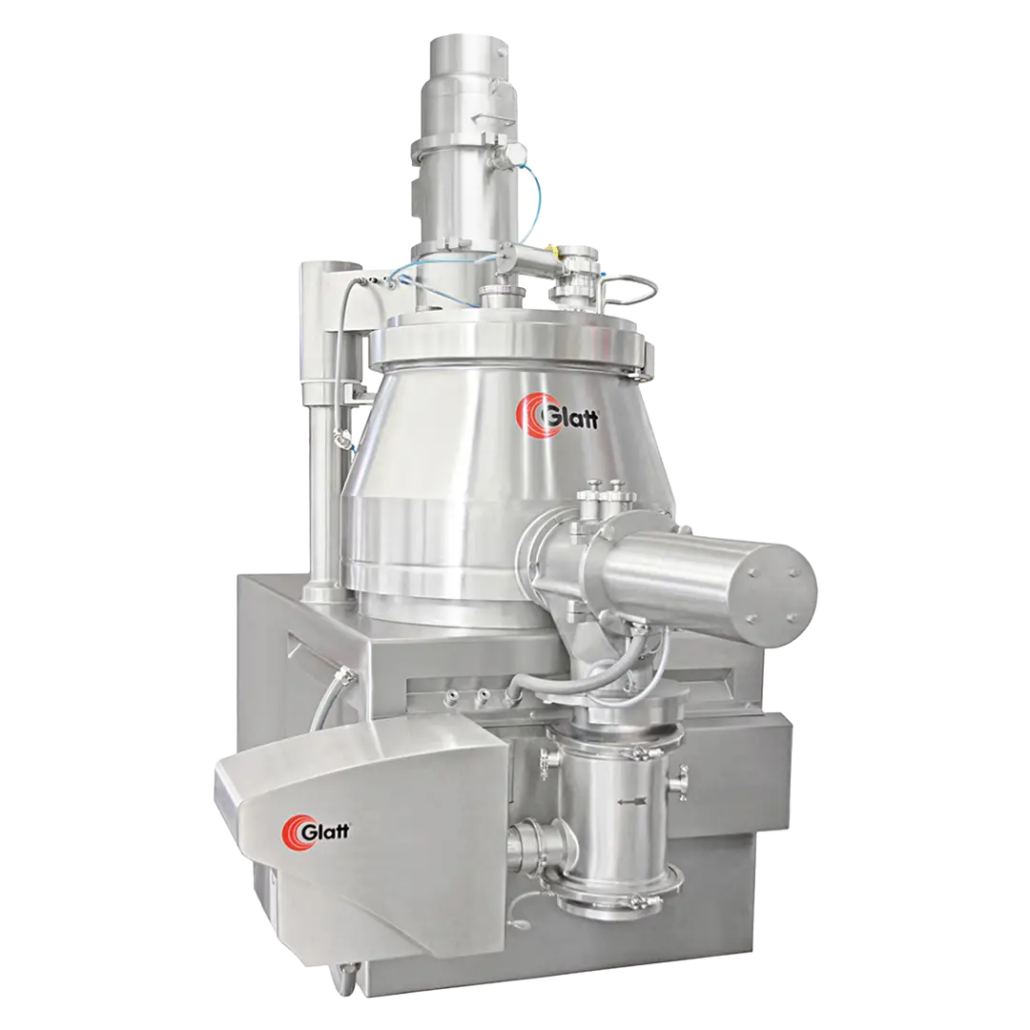

Glatt vertical granulators are the first choice when high granule density and fast granulation are required. They are characterized by their low space requirements, easy handling, and high cleanability.

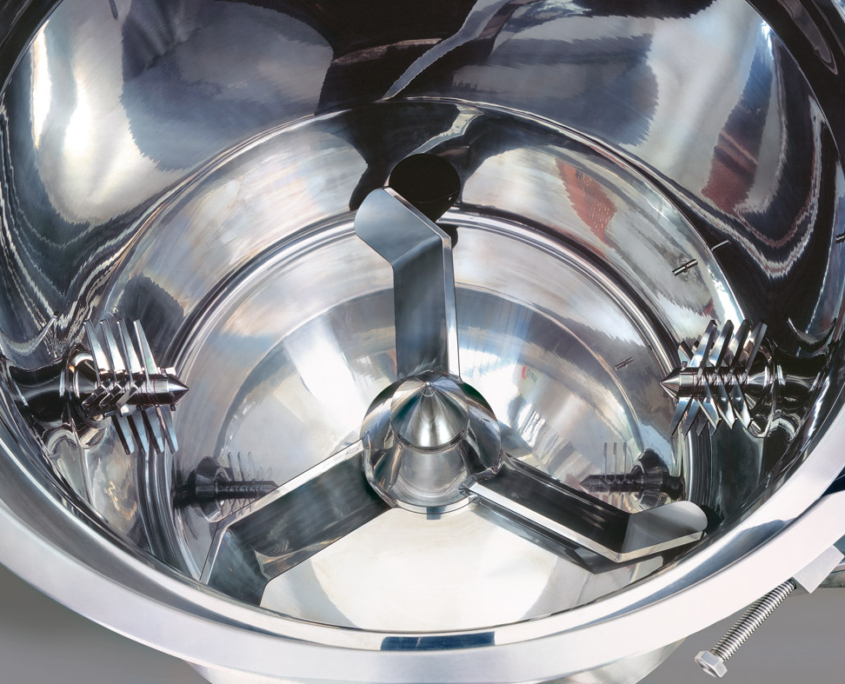
Z-rotor: The unique geometry of the Z-rotor achieves maximum efficiency while minimizing energy consumption.
Chopper: The positioning of the chopper in the lower third of the working vessel enables very high productivity, even with minimal filling quantities.
| VG PRO | 100 | 200 | 400 | 600 | 800 | 1200 | 1500 | 2000 |
|---|---|---|---|---|---|---|---|---|
| Maximum usable volume (liters) | 110 | 200 | 408 | 620 | 800 | 1298 | 1605 | 2140 |
| Maximum batch size at 0.6 kg/dm³ | 15 - 48 | 30 - 96 | 60 - 192 | 90 - 288 | 120 - 384 | 180 - 384 | 225 - 720 | 300 - 960 |
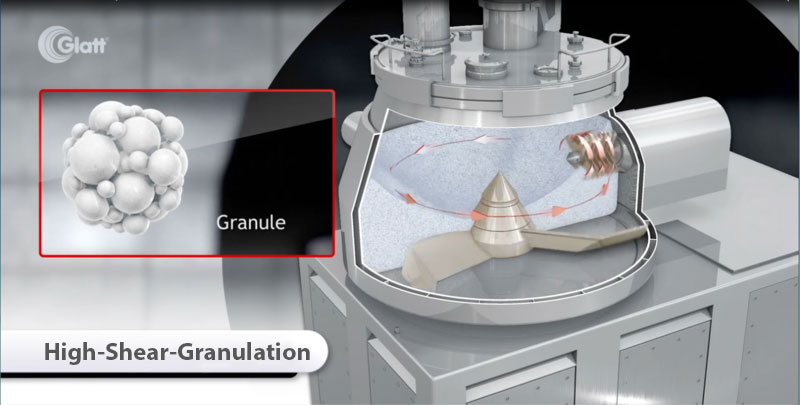
High shear granulation, also known as vertical granulation or wet granulation, is a highly developed shaping process for granulation.
The shaping process for granulation takes place in a closed vessel equipped with mixing tools and a chopper. The particles are simultaneously pulverized and mixed while a binder liquid is added. This creates liquid and solid bridges and very dense granules are formed.
Originally, the granulating liquid was poured into the product. Today, we achieve a better-metered distribution via a spray nozzle – a more uniform granulate is produced.

You need to load content from reCAPTCHA to submit the form. Please note that doing so will share data with third-party providers.
More InformationYou need to load content from Turnstile to submit the form. Please note that doing so will share data with third-party providers.
More InformationYou need to load content from reCAPTCHA to submit the form. Please note that doing so will share data with third-party providers.
More InformationYou need to load content from reCAPTCHA to submit the form. Please note that doing so will share data with third-party providers.
More InformationYou are currently viewing a placeholder content from reCAPTCHA. To access the actual content, click the button below. Please note that doing so will share data with third-party providers.
More Information