High-Shear Granulator – TMG
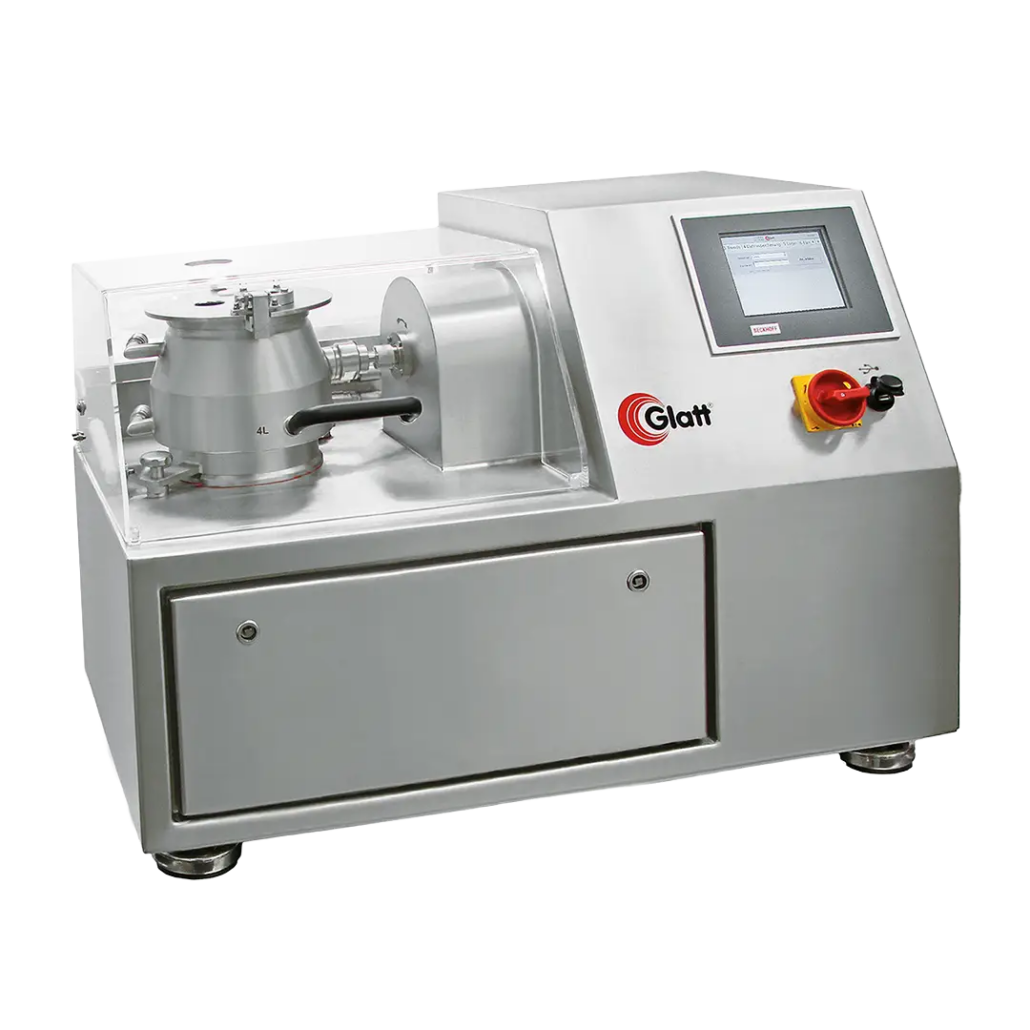

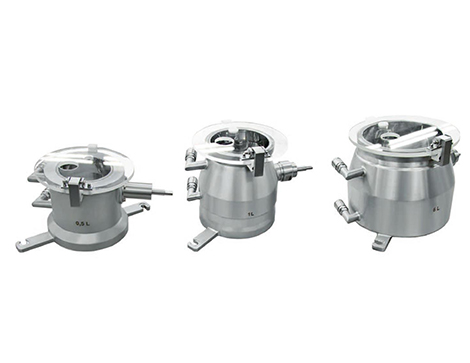
The flexibly interchangeable working vessels with volumes of 0.5, 1, 2, 4, and 6 liters enable the granulation of product quantities between 0.1 and 4.5 liters.
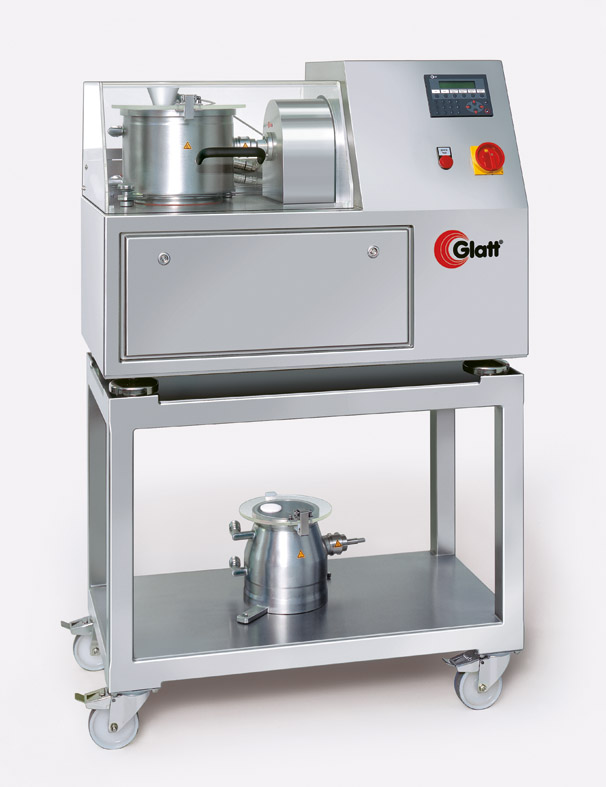
With its GMP-compliant design and compact construction, it is ideal for use as a tabletop device or on a mobile laboratory trolley.
| TMG Behälter | 0,5 | 1 | 2 | 4 | 6 | 8 |
|---|---|---|---|---|---|---|
| Batch size in liter | 0,1-0,4 l | 0,3-0,8 l | 0,5-1,6 l | 1,0-3,2 l | 1,5-4,8 l | 2,0-6,4 l |
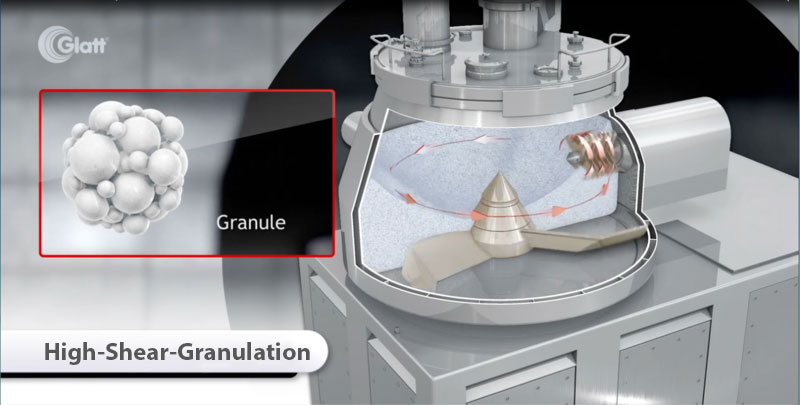
High shear granulation, also known as vertical granulation or wet granulation, is a highly developed shaping process for granulation.
The shaping process for granulation takes place in a closed vessel equipped with mixing tools and a chopper. The particles are simultaneously pulverized and mixed while a binder liquid is added. This creates liquid and solid bridges and very dense granules are formed.
Originally, the granulating liquid was poured into the product. Today, we achieve a better-metered distribution via a spray nozzle – a more uniform granulate is produced.

You need to load content from reCAPTCHA to submit the form. Please note that doing so will share data with third-party providers.
More InformationYou need to load content from Turnstile to submit the form. Please note that doing so will share data with third-party providers.
More InformationYou need to load content from reCAPTCHA to submit the form. Please note that doing so will share data with third-party providers.
More InformationYou need to load content from reCAPTCHA to submit the form. Please note that doing so will share data with third-party providers.
More InformationYou are currently viewing a placeholder content from reCAPTCHA. To access the actual content, click the button below. Please note that doing so will share data with third-party providers.
More Information